We’ve Got Your Back: Sharing a New TDI Community Awareness Campaign
Tribal Disease Investigation/Intervention (TDI) staff support community members in accessing STI, HIV, and hepatitis testing, treatment, and prevention services. Their work is grounded in care—checking in on relatives, protecting community health, and helping people stay connected to care. Often, TDI serve as a bridge between clinics and the community, helping make health services feel more approachable and familiar.
We also know that conversations about sexual health can feel sensitive, especially when they begin with someone unfamiliar. To support Tribal communities as they build and strengthen TDI programs, we launched a community awareness campaign to help communities understand who TDI are and the role they play in care and prevention. It was created to support Tribal public health programs and clinics in introducing TDI in a way that feels familiar, respectful, and grounded in care.
Why This Campaign Exists
In many Tribal communities, TDI programs are still relatively new. When someone receives a call about a health concern—especially related to HIV, syphilis, hepatitis C, or other STIs—it can feel unexpected or confusing if they don’t know who’s calling or why.
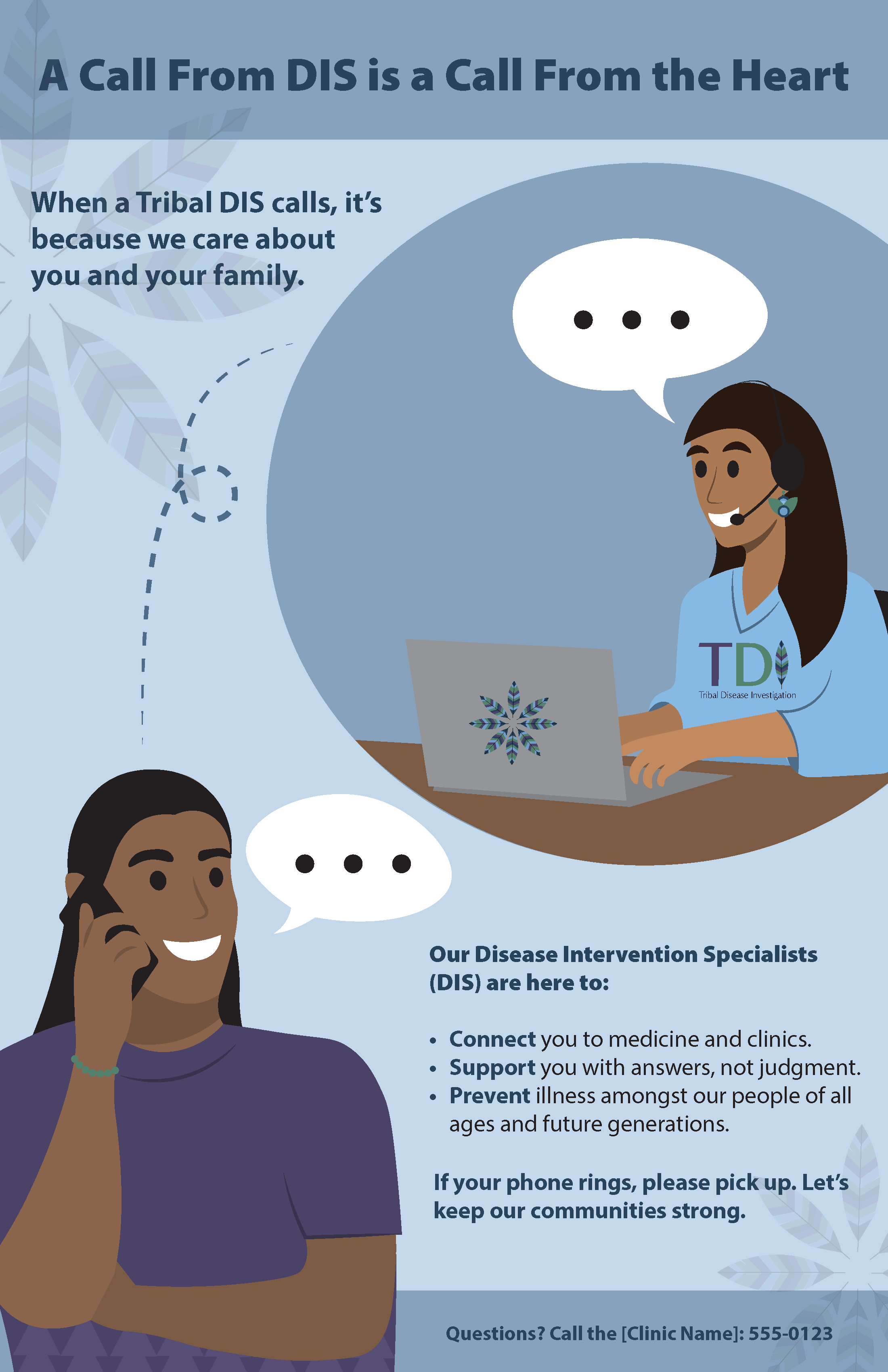
At its heart, the campaign shares a simple message: TDI are community helpers. They are not there to judge or spread gossip. They are there to offer information, support, and connection to care—so families, elders, children, and future generations can stay healthy.
Centering Relationship and Trust
Across all of the materials, TDI are described not just by their job title, but by their role in the community. They are often neighbors, cousins, or relatives—people who understand the importance of privacy and the responsibility that comes with this work.
The language reflects what many TDI already practice:
Listening without judgment
Protecting confidentiality
Helping people access testing, treatment, and resources
Supporting individuals in notifying partners without ever sharing their name
These messages are intentionally clear and plain-spoken, because trust grows when people know what to expect.
About the Campaign Materials
The TDI Community Awareness Campaign includes:
Posters designed for Tribal clinics and community spaces, introducing TDI and encouraging community members to answer the phone when a TDI calls
Postcards that emphasize key messages in a friendly, relational tone
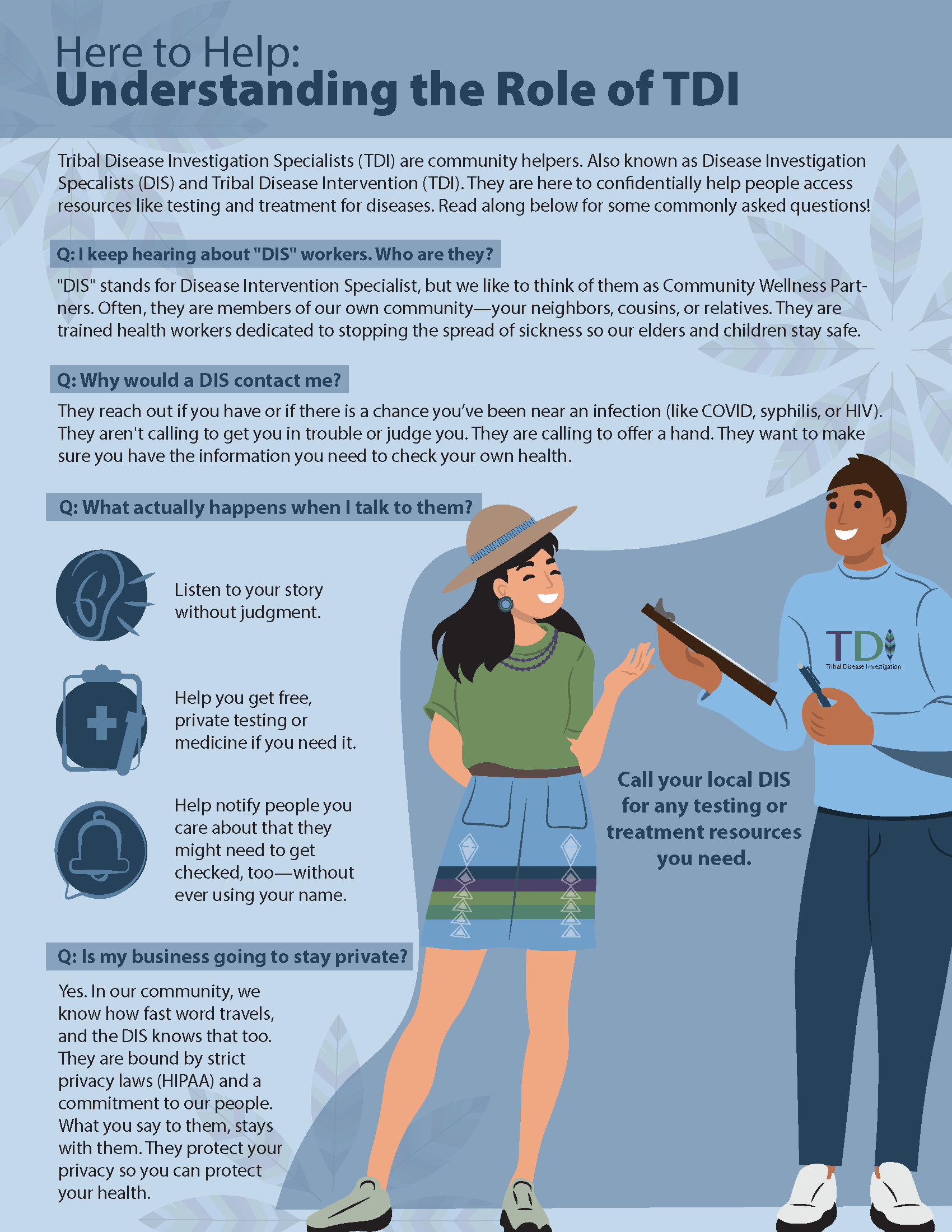
A Community FAQ that responds to common questions about privacy, why someone might be contacted, and what happens during a conversation with a TDI
Together, these materials help normalize TDI as part of routine community care—
not something to fear or misunderstand.
How Partners Can Use This Campaign
These materials are meant to be flexible and easy to use. Tribal public health departments and clinics can:
Display posters in waiting rooms, hallways, or other shared spaces
Share postcards during testing, treatment, outreach, or education efforts
Use the FAQ as a handout or conversation guide when explaining TDI services
Introduce the campaign alongside the launch or expansion of a TDI program
When people see these messages ahead of time, a call from a TDI feels less like a surprise—and more like what it is: a check-in from someone who cares.
Who This Campaign Is For
This campaign is available for:
Tribal public health departments
Tribal clinics and health systems
Partners supporting infectious disease response in Tribal settings
We invite partners to share this campaign with Tribal programs who may find it useful and to support its use in ways that fit local context and community needs.
Moving Forward, Together
Health education works best when it reflects the values of the people it’s meant to serve. This campaign was created to support TDI programs in building understanding before a call ever happens—and to remind communities that this work is rooted in care, confidentiality, and relationship.
Because at the end of the day, TDI work is about the same thing it’s always been about: looking out for our relatives and keeping our communities strong.
For information on how you can access this campaign for your community, please contact us. This campaign was done in partnership with Pez Luna and Turtle Island Media Group. Funding was from the Minority HIV/AIDS Fund via the Indian Health Service HIV/HCV/STI Branch.