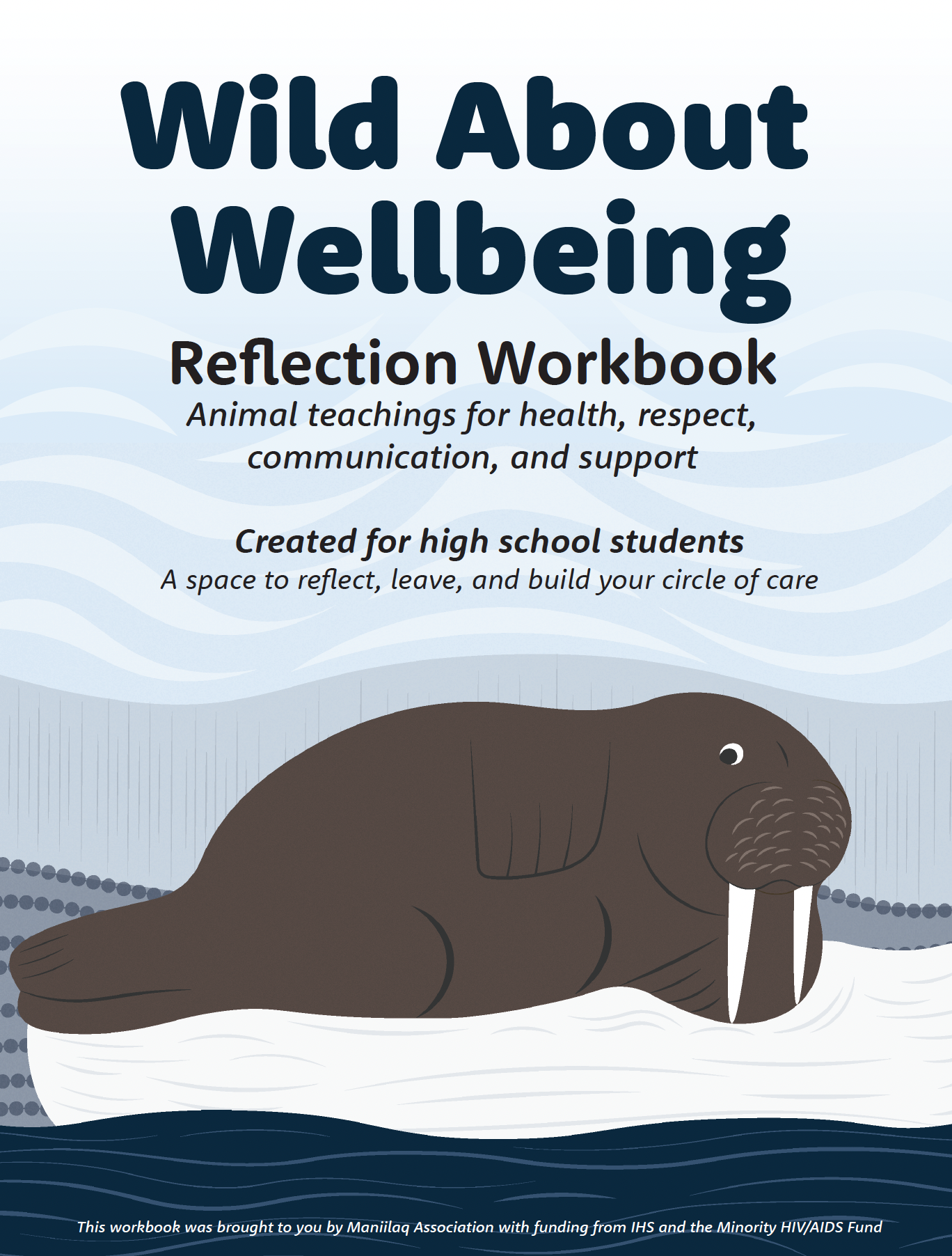
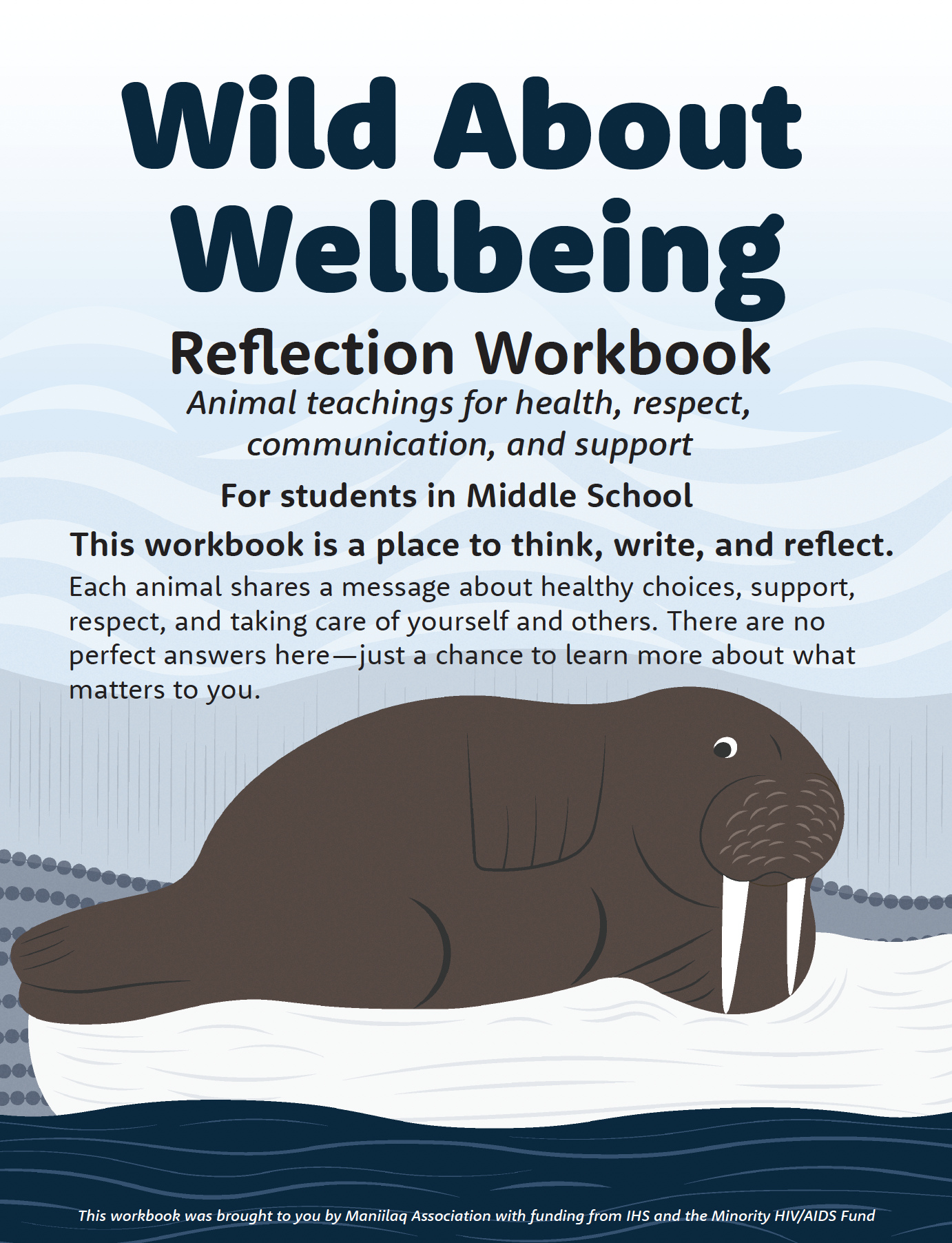
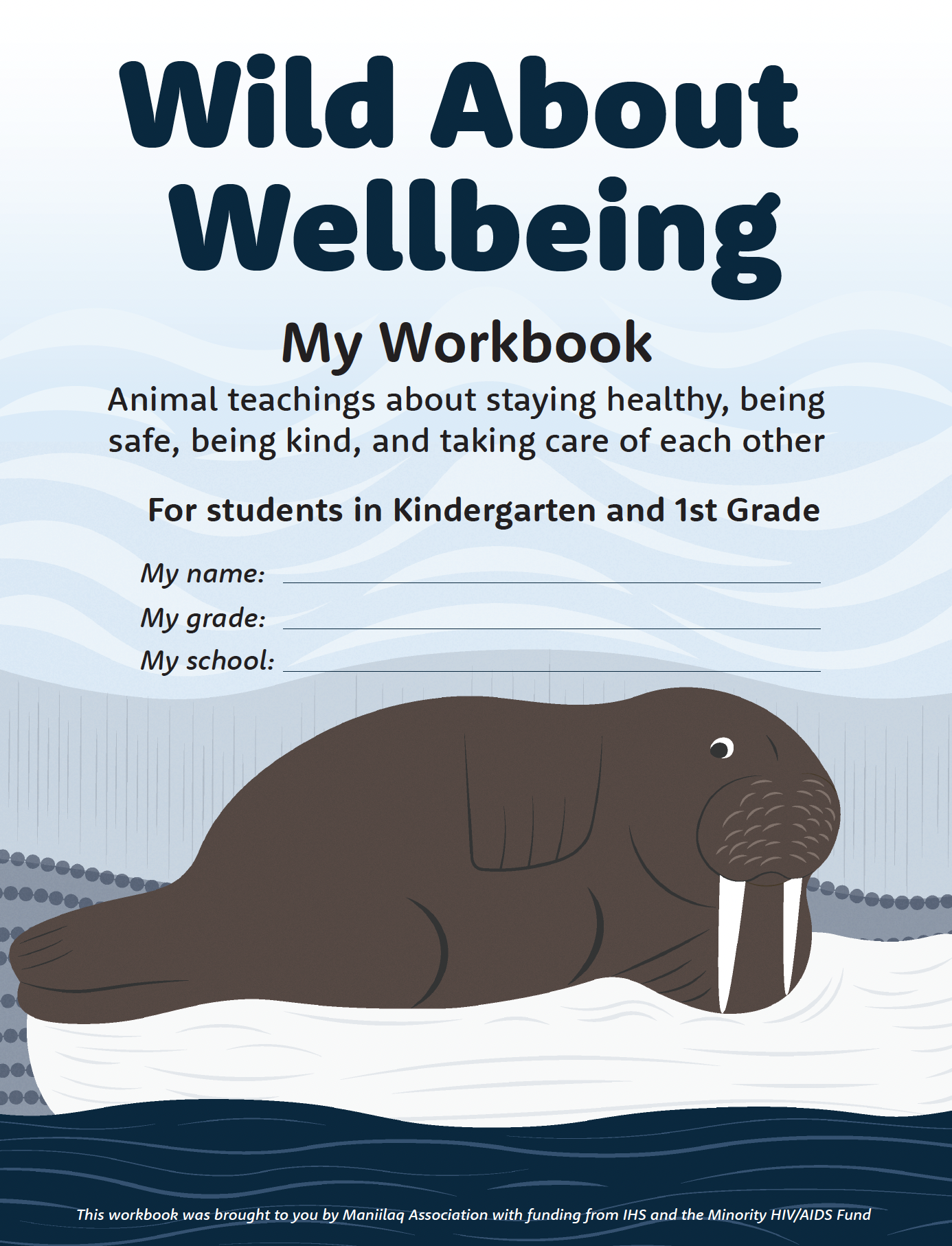
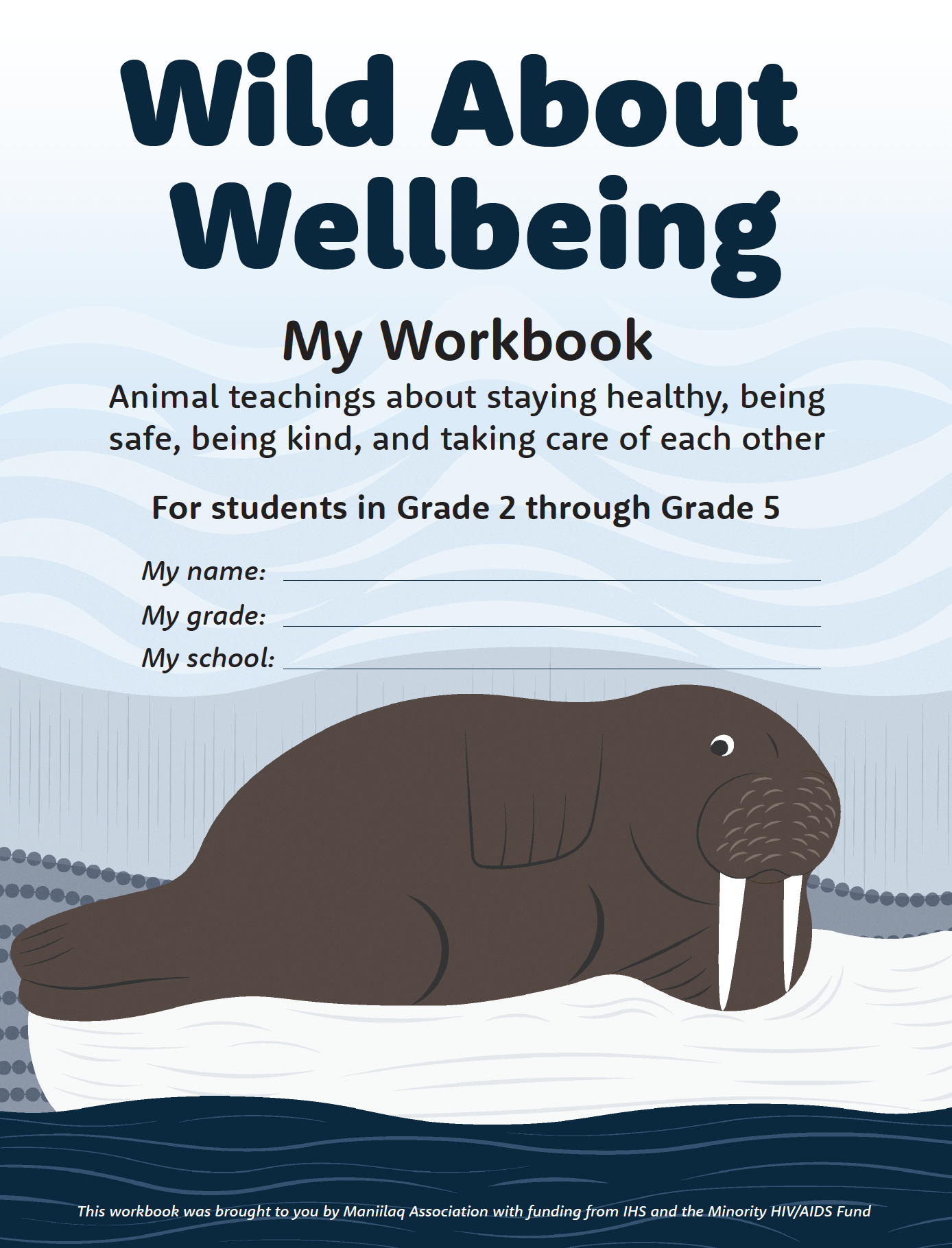
Rooted in Care, Guided by Animal Teachings: Introducing the Wild About Wellbeing Workbooks
When we launched the Wild About Wellbeing campaign, our goal was simple yet essential: use warmth, humor, and Arctic animal teachings to break the silence around sexual health and wellness. We wanted to create spaces where open, shame-free conversations could flourish across our communities.
Now, we are taking the next step in that journey.
In close partnership with Maniilaq Association and with funding from the Indian Health Service (IHS), The Raven Collective developed the Wild About Wellbeing Workbooks—a culturally grounded health, safety, and relationship curriculum designed specifically for youth in the Maniilaq region. Grounded in traditional values and guided by community input, these workbooks weave Iñupiaq animal teachings together with medically accurate health education to equip our young relatives with the knowledge, self-worth, and safety tools they need at every stage of growing up.
Culturally Grounded Learning Across the Generations
At the center of Wild About Wellbeing are 12 Arctic animal teachings paired with Iñupiaq names. From Tuttu (Caribou) teaching us about taking care of our bodies to Tulugaq (Raven) showing us how to ask for and respect boundaries, these familiar relatives provide a supportive, culturally rooted framework for topics that can sometimes feel challenging to navigate.
Because young people’s needs shift as they grow, the workbooks are developmentally tailored to meet students right where they are:
Elementary: Laying Foundations of Safety and Respect
For our youngest learners, the focus is entirely on foundational body safety, healthy habits, and emotional wellbeing. Students learn about everyday wellness like sleep, handwashing, and nutrition (Caribou, Bowhead Whale, Salmon), naming emotions and asking trusted adults for help (Beluga, Snowy Owl), and personal boundaries and respect (Musk Ox, Walrus). Crucially, the elementary workbook teaches body safety: the principle that “my body belongs to me,” recognizing the difference between safe and unsafe touches, and reporting secrets to a trusted adult. It also introduces correct anatomical terms (such as penis, vulva, and vagina), an evidence-based practice supported by pediatricians and child abuse prevention experts that removes stigma and empowers children to protect themselves and communicate clearly.
Middle & High School: Navigating Puberty, Relationships, and Decision-Making
As youth transition into adolescence, their social worlds and bodies undergo profound changes. The middle and high school workbooks expand to address puberty and normalize the wide range of bodily development (Ptarmigan, Caribou), while teaching clear communication, consent, and healthy relationship dynamics (Raven, Musk Ox, Walrus). Students explore safety planning, navigating peer pressure and substance use around consent (Polar Bear, Snowy Owl), and accessing support through their School-Based Health Center (Beluga, Bowhead Whale). They also receive factual sexual health education—including STI prevention and testing, contraception options, emergency contraception, and PrEP (Seal, Salmon, Arctic Fox).
Meeting Real Needs with Compassion and Evidence
Young people in the Maniilaq service area experience disproportionately high rates of STIs, including chlamydia, gonorrhea, and syphilis. When youth lack access to reliable health information, they often turn to rumors, internet searches, or peer pressure to figure things out on their own.
The evidence is clear: comprehensive, culturally resonant health education does not accelerate sexual activity. Instead, it delays initiation, encourages safer practices, and equips youth with the critical thinking skills to make informed, responsible choices.
All information across the workbooks is medically accurate and sourced from trusted public health authorities, including the CDC, ACOG, Planned Parenthood, and HIV.gov. Furthermore, the materials honor the diversity of all bodies and identities by using inclusive terms (such as AFAB and AMAB) and uplifting Two Spirit identities, which have deep, enduring roots across Indigenous communities.
Walking Hand-in-Hand with Families
Public health does not happen in isolation—it lives within families, homes, and community relationships. These workbooks are not designed to tell young people what personal or moral choices to make, nor do they replace the teachings shared at home. Rather, they provide students with accurate health facts and protective life skills so they can carry their family’s values forward with confidence.
We encourage parents, elders, and caregivers to review the materials, ask their students about the animal teachings they are exploring, and use these lessons as open doorways for deeper family conversations. Caregivers are always welcome to connect directly with teachers or their local School-Based Health Center to review the curriculum or discuss any questions.
By grounding our youth in accurate health knowledge, mutual respect, and cultural pride, we create a circle of safety and support around the next generation.
As Tuttu reminds us: We look out for each other.
If you have questions or if you would like to learn more, please reach out to Alicia Edwards at alicia@theravencollective.org.